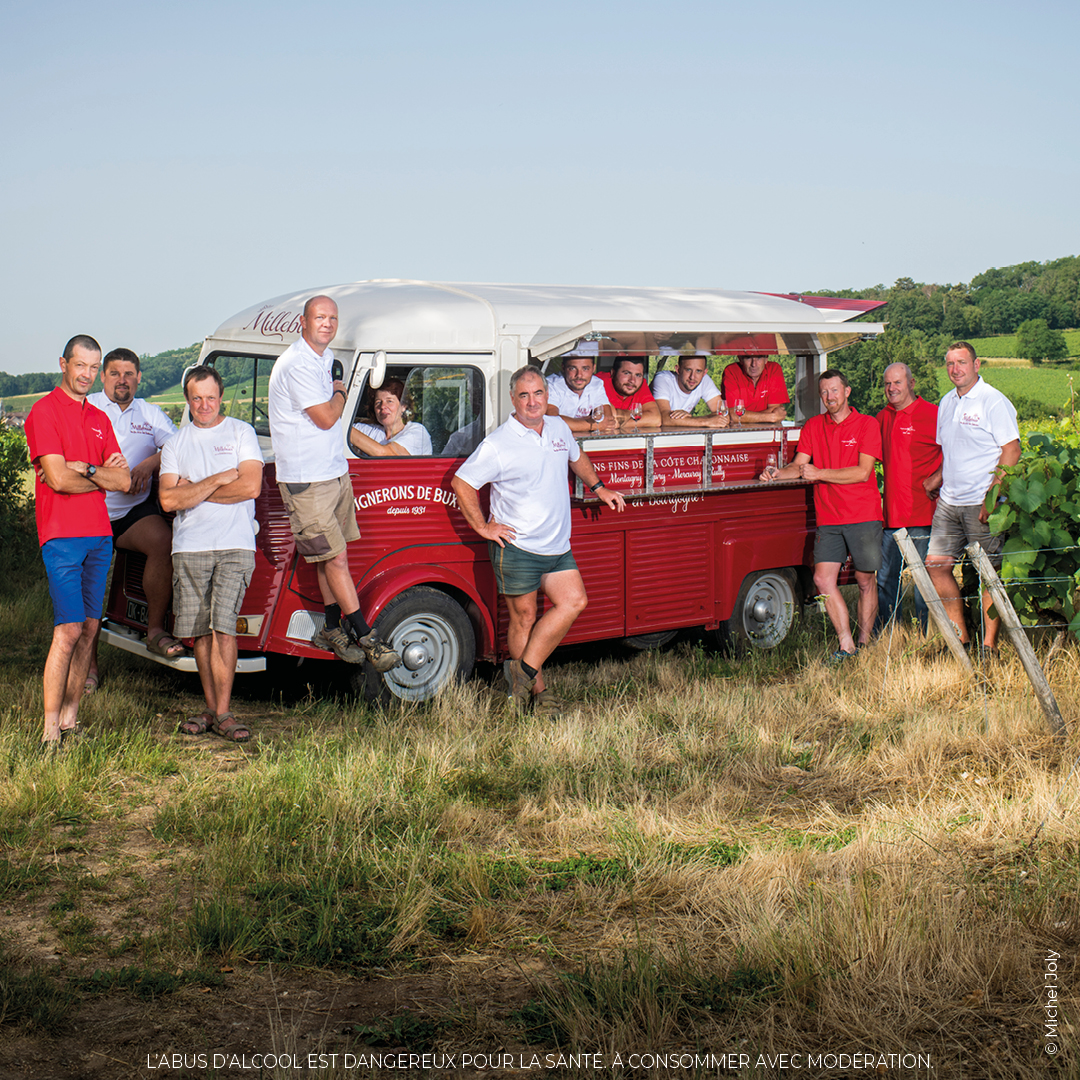
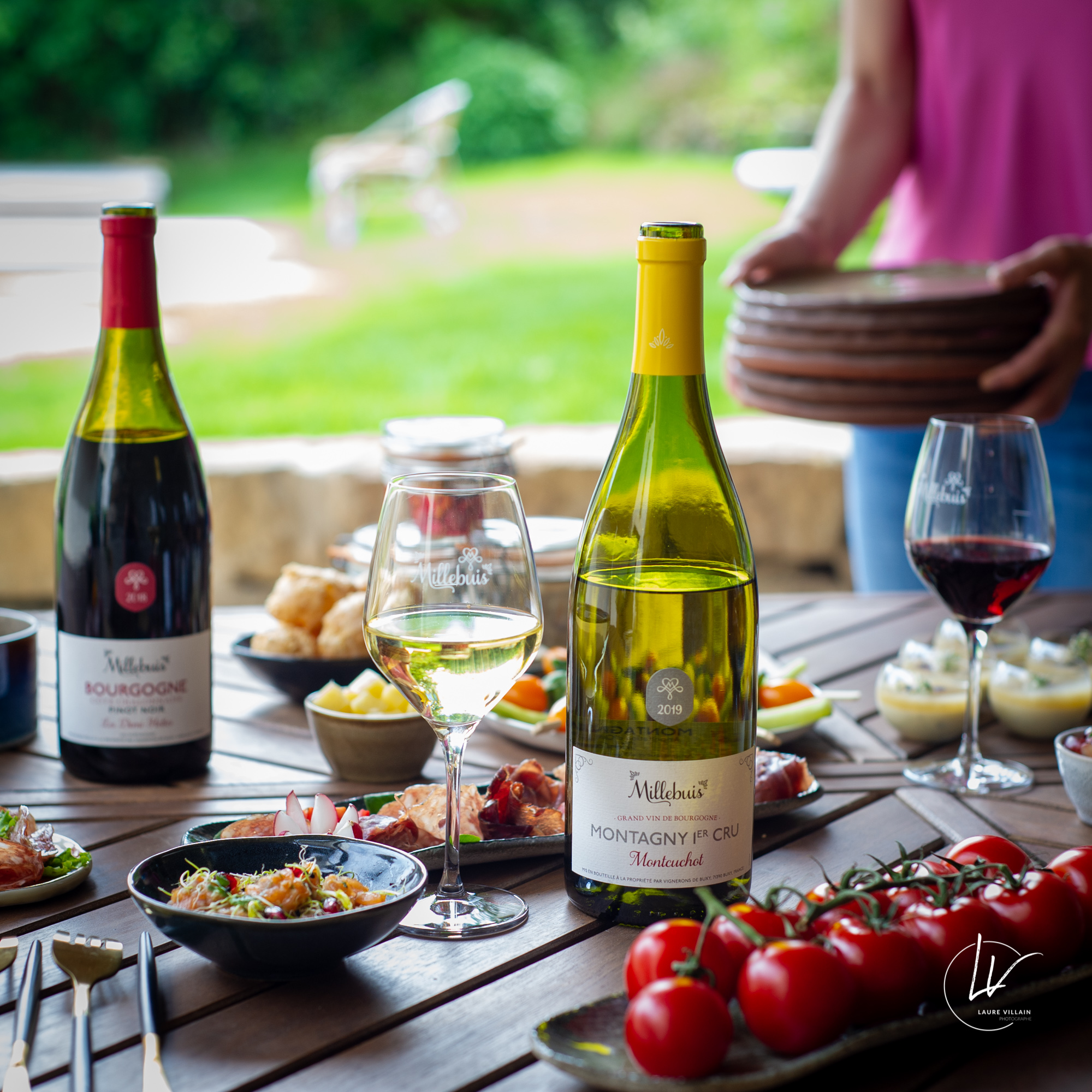
We asked Manuel Peyrondet to talk about his Côte Chalonnaise, to imagine beautiful pairings with some of our wines. …
What a pleasure!
Manuel Peyrondet is French Sommelier award-winner 2008, French craftsmanship award-winner - Sommelier 2011 and president of Chais d'œuvre..
LES CONSEILS DE MANUEL PEYRONDET
Ah la Côte Chalonnaise! In Burgundy
“Côte Chalonnaise has always been part of my life, an incredible flashback to my youth, because my dad, who was a doctor, took me with him all over Côte Chalonnaise in the car on his visits, and we went to Mercurey, to Rully, all over the region, and these were the wines we enjoyed at family meals for many years, so we were nourished by all this diversity and richness…”
Côte Chalonnaise, an excellent price-pleasure ratio!
As far as price is concerned, the region certainly offers wonderfully enjoyable wines at value for money…
WHAT WOULD YOU DRINK…
As an aperitif?
“What I like for an aperitif is to seek out minerality, pure whites that have a base, limestone, freshness, energy... to really get the taste buds going and above all to slice a little into the local specialties... So the gougères provide a fascinating contrast with these very dynamic whites and that's obviously where it's most effective.”
Montagny 1er Cru « Les Coères »
With grilled red meat?
“With simple dishes, you need wines of spontaneity, fruit, fruit, and more fruit… With grilled meat, a beautiful rib of beef from Charolles (near Buxy), you need spontaneity, so of course you need high-quality meat, cooked just right, but what you really want is simply that tangy fruitiness, that precision, that natural freshness of Pinot Noir, that touch of extremely fine tanins When you have a Pinot like that served at the very edge of freshness at 14°C, it’s a firework display.”
Bourgogne Côte Chalonnaise Pinot Noir
With slow-simmered beef bourguignon?
“With a beef bourguignon, you need density, comfort, richness… it’s the quintessential family dish where you want to mop up the sauce at the end with bread. At Millebuis, there’s this “Clos Jus”. It’s a plot quite apart: you go into the earth, into the depths, the clays are red, it increases the fruit tenfold, this juicy intensity on the black cherry, the burlat, the stone… all while being very harmonious and refined. So we have a wine that is complex, of course, serving the richness of the taste of the dish, but above all, it perfectly marries the sauce. It’s the sauce that often makes the food and wine pairing in a dish, and when faced with a concentrated and full-bodied sauce like that of beef bourguignon, you need at least a “Clos Jus”.
Givry 1er Cru « Clos Jus »
With poultry in a cream sauce?
“First of all, you have to think about the quality of the poultry, preferably from Louhans (Bresse, which is nearby), so relatively firm flesh with a lot of tenderness at the same time… this calls for wines, thanks to the sauce, which will have a little more concentration, richness and naturally volume in the mouth. So we obviously like to contrast these preparations with wines that have a little more depth and density. This legendary cru from the vineyards of the sun, which is rather early, and which makes wines with a little more richness, dry extracts and natural concentration, is an interesting answer. It works very well of course, it is one of the great white pairings that all sommeliers adore, and that all gourmets adore.”
Montagny 1er Cru « Vigne du Soleil »
With goat's cheese?
“First thing, when it comes to cheese, avoid reds. Firstly, because you are at the end of the meal and this is actually the time when the taste buds are the least receptive. I advise you to bring dynamism and freshness with whites which marry much better with lactic proteins than reds.
Then you need wines suited to the type of cheese, in this case goat's cheese here. That calls for whites that have freshness and dynamism. All the local cheeses work very well with the punchy Chardonnays that are more citrusy... You must of course think about the maturation of these cheeses. If they are rather fresh, you should favor young vintages. If we are going for slightly more mature cheeses, you should look for bottles that are a little more mature.
This simple Millebuis Chardonnay from the Côte Chalonnaise offers the perfect contrast: citrus, pear, and the obviously slightly nutty notes that the Chardonnay offers when it starts to melt a little. It pairs perfectly with the cheese!”
Bourgogne Côte Chalonnaise Chardonnay
With dessert?
The end of the meal is the moment when we are generally no longer thirsty or hungry, but we still need to accompany this end of the meal with a little lightness and freshness. It's the moment when we want to go out for some fresh air and toast with a friend. We want that magical side that sparkling wines offer.
In Côte Chalonnaise they are making them better and better... it's really interesting, and these are products that you must of course approach with the awareness that they don't work with all desserts. As a sommelier, you must of course focus on the aromatic fragrances that serve it and give it depth.
Citrus works very well, so desserts that are not too sweet, based around citrus and pear work very well. A little creamy, for example, with vanilla mascarpone and a little lime just on pears like that, it's really very light, it's the airy dessert that gives a little relief.
A word of advice: decant this bottle very lightly if you really want to appreciate it... because at the end of a meal, the dynamism of a bubble can sometimes upset the taste buds. By doing this, we move away from the purely fermentative world of the bubble, we open the wines aromatically, we have something very calm, very slightly effervescent!
Crémant de Bourgogne “Blanche”
Among the Burgundy wines from the Côte Chalonnaise terroir, we offer you the chance to taste red and white wines aged in oak barrels or vats. The distinctive feature of these appellations of controlled origin is that they offer a wide range of aromas with scents of black fruits, white flowers, dried fruits, citrus fruits, etc. The grapes or berries come from several grape varieties, mainly Aligoté, Pinot Noir, and Chardonnay. The Côte Chalonnaise produces great red wines that pair perfectly with Charolais meat (the village of Charolles is just a stone's throw away) and great white wines that will accompany local AOC goat cheeses and Bresse poultry, also raised nearby, on the other side of the Saône.